Gut HealthObservational
Case Study: Rheumatoid Arthritis Remission in a 57-Year-Old Woman Using Gut-Directed Functional Medicine Protocol
Evidence:Cohort studies
Educational composite — not a single patient. This case study is an illustrative composite of a 57-year-old woman with rheumatoid arthritis, raised inflammatory markers, and the gut-barrier dysfunction and dysbiosis that often accompany autoimmune disease. It shows how a gut-restoration protocol, anti-inflammatory dietary elimination, mitochondrial support, and stress-axis rebalancing can support remission alongside — not in place of — conventional rheumatology care, when implemented carefully in collaboration with the prescribing clinician. It does not describe one identifiable patient; names, demographic specifics, and quoted dialogue are constructed for educational illustration. Always work with a registered clinician for individual care. Editorial review by Chris Massamba, Dip CNM, FMCHC.
Key learning points
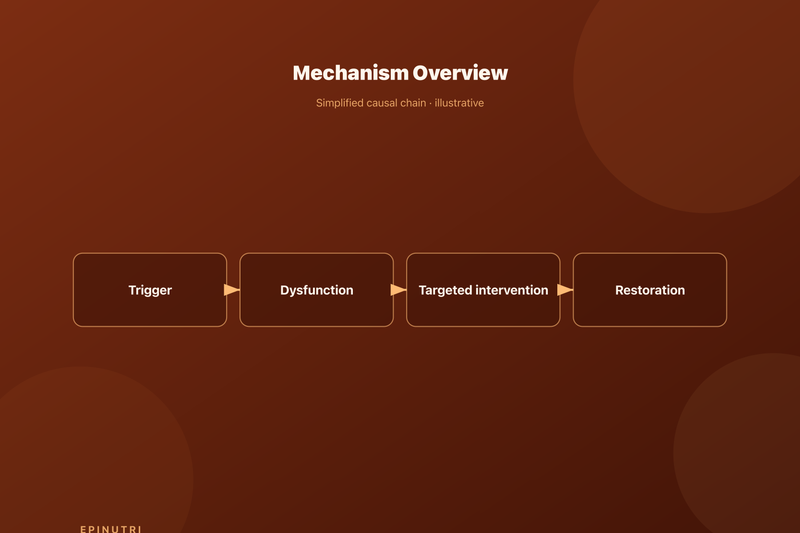
- Rheumatoid arthritis can be downstream of a gut-driven inflammatory process: antibiotic-induced dysbiosis, SIBO, and intestinal permeability may prime the immune system for autoimmune attack on joints.
- Long-term PPI therapy impairs protein digestion, mineral absorption, B12 status, and the gastric acid barrier. In an autoimmune patient, PPIs should be considered a modifiable risk factor.
- Medication deprescribing is possible when supported by biochemical evidence of reduced inflammation and restored gut barrier function. Clinicians respond to data.
- Patients frequently identify their own food triggers years before clinical investigation. When a patient reports a pattern, the appropriate response is to test it, not dismiss it.
- Outcomes are illustrative and reflect composite patterns. Individual responses vary depending on disease duration, medication history, adherence, and practitioner oversight.
Patient Presentation
Margaret (not her real name), a 57-year-old retired primary school headteacher from Surrey, presented to the clinic in January 2026 after five years of progressively worsening rheumatoid arthritis that had forced her into early retirement.
In her own words: "My hands are so stiff in the morning I can't make a cup of tea for two hours. My knees ache going downstairs. I'm exhausted all the time. And my stomach has been a mess for years — bloating, unpredictable bowels, reflux. No one's ever connected the dots between my gut and my joints." Diagnosed seropositive in 2021, she had escalated through methotrexate, sulfasalazine, and the biologic adalimumab, each helping for a while before losing effect.
The timeline showed a striking sequence. In 2019, two years before diagnosis, she completed three consecutive courses of broad-spectrum antibiotics for recurrent UTIs (trimethoprim, nitrofurantoin, ciprofloxacin). Within months she developed new bloating, alternating diarrhoea and constipation, and multiple food intolerances; joint pain began roughly twelve months later, starting in the small joints of the hands before spreading to wrists, knees, and ankles. She had noticed flares after wheat, dairy, and nightshades — dismissed by her rheumatology team as coincidental. She was taking daily omeprazole for reflux, paracetamol for breakthrough pain, and had gained 11 kg on adalimumab.

Initial Clinical Assessment
A structured nutritional and systems review — informed by the Stewart Nutrition practitioner reference (Stewart, 2024) and aligned with NICE Clinical Knowledge Summaries and NIH Office of Dietary Supplements guidance — mapped her symptoms by body system:
- Musculoskeletal: joint pain and stiffness (wrists, MCPs, PIPs, knees, ankles), morning stiffness >2 hours, quadriceps weakness — suggestive of vitamin D insufficiency (Pineda and McGrath, 2021), magnesium, and essential-fatty-acid imbalance.
- Digestive: bloating within 30 minutes of eating, alternating constipation and loose stools, reflux despite PPI therapy, multiple intolerances — consistent with SIBO and compromised gut-barrier integrity (Tajik et al., 2020).
- Nervous: "cotton-wool" brain fog, poor short-term memory, fingertip tingling — suggestive of B12 insufficiency, possibly compounded by long-term PPI use (Clemente, Manasson and Scher, 2018).
- Immune: frequent upper-respiratory infections (4–5/year), slow healing, antibiotic overuse — indicating mucosal compromise and likely dysbiosis (Zhang et al., 2015).
- Energy: unrefreshing fatigue, cold intolerance, weight gain — suggestive of mitochondrial dysfunction and possible thyroid involvement despite a normal TSH.
- Skin/mucosa: dry skin, angular cheilitis, ridged brittle nails — signs of essential-fatty-acid and zinc insufficiency.
The picture was a gut-driven systemic inflammatory disorder rather than isolated joint disease (Zaiss et al., 2021). The 2019 antibiotics likely disrupted the microbiome and raised intestinal permeability (Scher, Littman and Abramson, 2016); food proteins and bacterial lipopolysaccharides crossing the compromised barrier had primed the immune system for the autoimmune attack expressed in her joints (Holers et al., 2018; Konig, 2020).
Red-flag review confirmed seropositive RA (anti-CCP >250 U/mL) with no malignancy, septic arthritis, or extra-articular complications (vasculitis, lung disease). Conventional labs reported as "normal" included a TSH within range despite cold intolerance and weight gain.
From the literature: "The gut-joint axis in rheumatoid arthritis is supported by evidence that intestinal permeability and microbial dysbiosis precede the onset of joint inflammation, suggesting that the gut may be a site of disease initiation." -- Zaiss et al., Nat Rev Rheumatol 2021
Interpretation: A symptom timeline of antibiotic exposure → GI dysfunction → autoimmune joint disease is consistent with the gut-joint axis literature. The concurrent GI symptoms, patient-reported food triggers, and long-term PPI use suggest gut permeability and dysbiosis remain ongoing drivers of immune activation despite immunosuppressive therapy.
Functional Health Matrix Assessment
The Functional Health Matrix is a clinical-reasoning framework, not a validated diagnostic test; the 1–5 node scores are structured clinical judgement (1 = severe dysfunction, 5 = optimal):
Functional Health Matrix Assessment
| Node | Initial Score | Clinical Rationale |
|---|---|---|
| Structural Integrity | 2/5 | X-ray erosions at MCPs, reduced grip strength (12 kg right, 9 kg left), walking tolerance 15 minutes before knee pain, quadriceps wasting from inflammation and inactivity. |
| Defence & Repair | 1/5 | Active autoimmune process (anti-CCP >250 U/mL, CRP 28 mg/L), frequent infections, slow healing, gut-joint axis dysregulation (Zaiss et al., 2021). |
| Energy Production | 1/5 | Severe fatigue (8/10), mitochondrial function compromised by chronic inflammation, probable methotrexate-related CoQ10 depletion, cold intolerance despite a normal TSH. |
| Biotransformation & Elimination | 2/5 | Medication burden (methotrexate, adalimumab, omeprazole, regular paracetamol) taxing hepatic pathways; bowel irregularity and antibiotic history reducing elimination and gut metabolic capacity. |
| Transport | 2/5 | Chronic inflammation impairing microvascular function; elevated CRP affecting endothelial health; likely lymphatic congestion from sedentary status. |
| Communication | 1/5 | HPA-axis dysregulation from chronic pain and stress, cortisol rhythm likely flattened (untested at baseline); possible thyroid involvement; cytokines disrupting neurotransmitter balance. |
| Assimilation | 1/5 | The root node: SIBO, multiple food intolerances, PPI-induced hypochlorhydria impairing protein and mineral absorption, and a compromised gut barrier confirmed by elevated serum zonulin (Tajik et al., 2020) — the origin and ongoing driver of systemic inflammation (Scher, Littman and Abramson, 2016). |
Total Initial Matrix Score: 10/35 (each node 1–5; 1 = severely compromised, 5 = optimal).
Interpretation: Four nodes scored 1/5 (Assimilation, Defence & Repair, Energy Production, Communication), with no node above 2/5 — the intersection of autoimmune inflammation, gut-driven permeability, iatrogenic drug burden, and HPA-axis dysregulation. Assimilation was the root node: gut permeability was both driving the autoimmune process and limiting the nutrient absorption needed for recovery. The strategy was to address the gut root whilst maintaining immunosuppressive safety.
Wheel of Life Assessment
Wheel of Life Assessment
| Dimension | Initial Score (1-10) | Assessment |
|---|---|---|
| Nutrition & Diet | 3/10 | Limited-variety British diet, multiple unrecognised food triggers, PPI-induced malabsorption, poor hydration. |
| Sleep & Recovery | 3/10 | Pain-disturbed (waking 2–3 times nightly), non-restorative, 5–6 hours, late bedtime from rumination. |
| Movement & Exercise | 1/10 | Essentially sedentary; walking and gardening lost to pain; no structured programme. |
| Stress Management | 2/10 | High anxiety about disease progression and lost career identity; no stress-management practice. |
| Relationships & Community | 5/10 | Supportive husband (married 32 years); social circle contracted since early retirement; feels isolated from former colleagues. |
| Purpose & Meaning | 4/10 | Loss of identity after leaving teaching; grandchildren provide meaning but she "can't keep up with them." |
| Environment & Toxins | 6/10 | Suburban Surrey, reasonable air quality, standard cleaning products, no occupational exposures. |
| Spiritual Practice | 5/10 | Lapsed churchgoer; some interest in mindfulness, open to meditation. |
Total Initial Wheel of Life Score: 29/80 (each dimension 1–10).
Interpretation: The lowest dimensions were Movement (1/10, pain-driven immobility), Stress Management (2/10), and Nutrition (3/10), with the loss of Purpose (4/10) after forced early retirement a significant psychosocial burden. The relatively preserved Environment (6/10) and Spiritual Practice (5/10) offered modest protective factors. Chronic pain, inadequate stress management, and an inflammatory diet formed a self-reinforcing cycle that immunosuppression alone could not break — so we prioritised diet, stress, and gentle movement before any intense exercise.
Functional Testing Ordered
Guided by the presentation and matrix assessment, the following tests were ordered (see functional medicine testing rationale). Optimal ranges below reflect practitioner preference, not guideline thresholds.
Comprehensive Stool Analysis (Genova Diagnostics GI Effects):
- Faecal calprotectin: 186 microg/g (elevated, reference <50)
- Pancreatic elastase: 198 microg/g (borderline low, reference >200)
- Zonulin: 142 ng/mL (markedly elevated, reference <107 — confirming intestinal permeability) (Tajik et al., 2020)
- Short-chain fatty acids: butyrate low at 4.2 micromol/g (reference >6.0)
- Commensal bacteria: marked deficiency in Bifidobacterium and Lactobacillus species (Chen et al., 2016)
- No pathogenic bacteria, ova, or parasites detected
SIBO Lactulose Breath Test:
- Positive for hydrogen-dominant SIBO: baseline hydrogen 18 ppm, peak rise to 86 ppm at 80 minutes
- Methane: negative (peak 8 ppm)
Nutritional Evaluation:
- 25-OH Vitamin D: 28 nmol/L (deficient, optimal >75) (Pineda and McGrath, 2021). For context on vitamin D dosing considerations, see the related guidance.
- Red blood cell magnesium: 4.2 mg/dL (borderline low, optimal >5.5)
- Plasma zinc: 10.2 micromol/L (low, optimal 12-18)
- Omega-3 Index: 3.8% (deficient, optimal >8%)
- Homocysteine: 14.2 micromol/L (elevated, optimal <8 — suggesting functional B12/folate insufficiency)
- hs-CRP: 6.8 mg/L (significantly elevated, optimal <1.0)
HPA Axis (DUTCH Complete):
- Flattened cortisol awakening response (CAR): 15% rise (optimal >50%)
- Low total daily free cortisol: 98 nmol (optimal 138-260)
- Cortisol-to-DHEA ratio: suggestive of early-stage adrenal insufficiency secondary to chronic inflammatory stress
Intervention Protocol
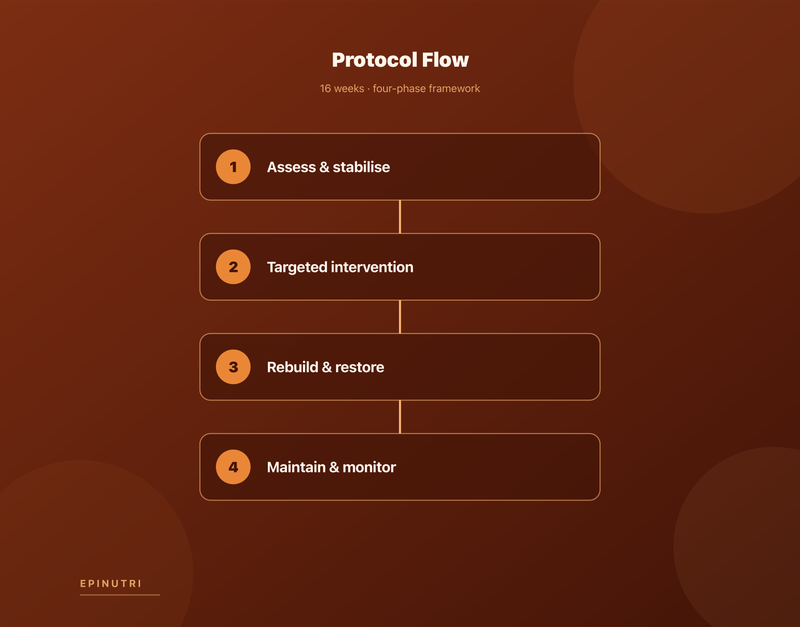
The therapeutic strategy followed three phases, addressing the Assimilation node first (as the identified root driver) before targeting downstream systems (Nutri-Link, 2024).
Phase 1: Gut Restoration (Weeks 1-6)
Dietary intervention:
- Modified elimination diet for 6 weeks, removing gluten, dairy, nightshades (tomatoes, peppers, aubergines, potatoes), refined sugar, alcohol, and processed foods (Konig, 2020)
- Emphasis on anti-inflammatory foods: wild-caught salmon (omega-3), bone broth (collagen/glycine for gut barrier repair), turmeric, ginger, fermented vegetables (probiotic reinoculation) (Marietta et al., 2016)
- Four-week rotation plan for remaining foods to prevent new sensitivities
For the detailed framework underpinning this approach, see the 5R gut health protocol and the __LINK_492f607ff790__.
SIBO eradication protocol:
- Oregano oil (standardised to 70% carvacrol): 200 mg three times daily, weeks 1-4
- Berberine HCl: 500 mg three times daily, weeks 1-4
- Partially hydrolysed guar gum (prebiotic): 5 g daily as tolerated, introduced week 3
Gut barrier support:
- L-glutamine: 5 g twice daily, ongoing
- Zinc carnosine: 75 mg twice daily, weeks 1-8
- Vitamin D3: 5,000 IU daily (loading dose for 8 weeks, then maintenance 2,000 IU) (Pineda and McGrath, 2021)
Caution: Long-term PPI therapy impairs protein digestion, mineral absorption (magnesium, zinc, calcium), and B12 status. In autoimmune patients, PPIs should be considered a modifiable risk factor, not a benign background medication. However, withdrawal must be gradual over 3 weeks minimum to manage rebound acid hypersecretion.
Digestive support:
- Gradual PPI withdrawal over 3 weeks (rebound management with DGL liquorice and slippery elm)
- Betaine HCl with pepsin: titrated up to 650 mg with protein-containing meals
- Digestive enzymes (broad-spectrum): 1-2 capsules with each main meal
Phase 2: Immune Modulation and Metabolic Restoration (Weeks 7-12)
Anti-inflammatory and immune modulation:
- Curcumin (BCM-95): 500 mg twice daily
- Omega-3 fatty acids (EPA/DHA): 3,000 mg daily (aiming for Omega-3 Index >8%) (Clemente, Manasson and Scher, 2018)
- Vitamin D3 maintenance: 2,000 IU daily
- Magnesium glycinate: 400 mg at bedtime
Mitochondrial support (following the EPINUTRI Mitochondrial Protocol):
- Coenzyme Q10 (ubiquinol): 200 mg daily (addressing probable methotrexate-induced depletion) (NICE, 2020)
- Acetyl-L-carnitine: 1,000 mg daily
- Alpha-lipoic acid: 300 mg twice daily
- B-complex (activated forms): 1 capsule daily
HPA axis rebalancing:
- Phosphatidylserine: 300 mg at bedtime (cortisol modulation)
- Ashwagandha (KSM-66): 600 mg daily
- Morning sunlight exposure: minimum 15 minutes within 30 minutes of waking
Joint support:
- Collagen peptides (Type II): 10 g daily
- Glucosamine sulphate: 1,500 mg daily
- MSM: 2,000 mg daily
Phase 3: Lifestyle Integration and Maintenance (Weeks 13-16)
Movement programme:
- Week 13-14: daily 10-minute gentle walks, chair-based yoga (15 minutes, 3x weekly)
- Week 15-16: progressed to 20-minute walks, standing yoga sequence, introduction of resistance band exercises for quadriceps and gluteal strengthening
Sleep optimisation:
- Consistent sleep window 22:00-06:30
- Magnesium glycinate 400 mg with glycine 3 g at bedtime
- Blue light restriction from 20:00 (amber glasses)
- Bedroom temperature maintained at 18 degrees C
Stress and identity restoration:
- Guided breathwork (4-7-8 pattern): 5 minutes, twice daily
- Weekly volunteering at local primary school library (re-establishing purpose and community connection)
- Journaling practice: 10 minutes daily, gratitude-focused
Practice tip: Present biochemical evidence of gut-barrier restoration (normalising zonulin, falling CRP) to the rheumatologist as supporting data for dose-interval extension rather than discontinuation. Clinicians respond to data and collaborative language, not ultimatums.
Medication management (prescriber-led, coordinated with her NHS rheumatologist):
- Adalimumab: dose interval extended from 2 to 3 weeks (week 12), then to 4 weeks (week 16) (NICE, 2020)
- Methotrexate: dose reduced from 15 mg to 10 mg weekly (week 16)
- Plan for further reduction contingent on inflammatory markers
Interpretation: The 16-week protocol ran longer than a typical 12-week programme because autoimmune cases need sustained gut-barrier restoration before immunosuppressive medication can be safely reduced. The extended 6-week gut-restoration phase allowed careful PPI withdrawal and SIBO eradication before layering immune modulation. Prescriber-led deprescribing began only at week 12, after objective evidence of falling CRP and normalising zonulin.
Evidence tier summary
Evidence tier summary
| Intervention | Evidence tier | Key sources |
|---|---|---|
| Gut permeability as RA driver (zonulin) | Strong (mechanistic + animal model) | Tajik et al. 2020; Zaiss et al. 2021 |
| Omega-3 (EPA/DHA 3,000 mg) for RA | Strong (systematic reviews + RCTs) | Clemente et al. 2018; NIH ODS 2024 |
| Vitamin D3 for autoimmune modulation | Strong (systematic review) | Pineda and McGrath 2021 |
| SIBO eradication (herbal antimicrobials) | Moderate (RCTs) | Chedid et al. 2014 |
| Curcumin (BCM-95) for inflammation | Moderate (RCTs) | Chandran and Goel 2012 |
| CoQ10 for methotrexate-induced depletion | Emerging (mechanistic + case series) | NICE NG100 2020 |
Legend: Strong = systematic reviews or multiple large RCTs; Moderate = individual RCTs, cohort studies, or strong mechanistic data with clinical support; Emerging = pilot or mechanistic evidence pending further trials. The gut permeability–RA link, omega-3, and vitamin D3 rest on the well-established gut-joint axis literature; SIBO eradication and curcumin have moderate RCT support; CoQ10 for methotrexate-induced depletion is mechanistically compelling but lacks dedicated RA RCTs.
Safety note (do not weaken): In autoimmune disease, corticosteroids, immunosuppressants, and DMARDs (methotrexate, biologics such as adalimumab) are never tapered abruptly and any change is prescriber-led, made by the rheumatologist — never on a patient's or practitioner's initiative. Abrupt or unsupervised withdrawal risks adrenal suppression, severe disease flare, joint destruction, and systemic complications. Functional medicine supports remission alongside, not instead of, rheumatology care: generate the biochemical evidence first and let the prescribing clinician decide. Supplements are adjuncts, not substitutes for pharmacotherapy.
Outcomes at 16 Weeks
These outcomes reflect a composite pattern; individual responses vary with disease duration, medication history, adherence, and co-existing conditions. Autoimmune conditions require ongoing management, so these results illustrate a trajectory of remission, not a cure.
Symptom resolution:
- Morning stiffness reduced from >2 hours to <15 minutes
- Joint pain (VAS): reduced from 7/10 to 2/10
- Grip strength: right hand improved from 12 kg to 18 kg, left from 9 kg to 15 kg
- Walking tolerance: from 15 minutes to 45 minutes without pain
- Bloating and bowel irregularity: fully resolved
- Reflux: resolved within 2 weeks of PPI withdrawal
- Fatigue: from 8/10 to 2/10 on fatigue severity scale
Repeat functional testing:
- Faecal calprotectin: 78 microg/g (significant reduction from 186)
- Zonulin: 89 ng/mL (normalised — gut barrier restored, reference <107)
- SIBO breath test: negative (peak hydrogen 22 ppm)
- 25-OH Vitamin D: 82 nmol/L (replete)
- Omega-3 Index: 7.6% (approaching optimal)
- hs-CRP: 2.1 mg/L (significant reduction from 6.8)
- Homocysteine: 8.4 micromol/L (normalised)
Repeat Functional Health Matrix (Week 16):
Outcomes at 16 Weeks
| Node | Initial | Final | Change |
|---|---|---|---|
| Structural Integrity | 2 | 3 | +1 |
| Defence & Repair | 1 | 3 | +2 |
| Energy Production | 1 | 3 | +2 |
| Biotransformation & Elimination | 2 | 3 | +1 |
| Transport | 2 | 3 | +1 |
| Communication | 1 | 3 | +2 |
| Assimilation | 1 | 4 | +3 |
| Total | 10/35 | 22/35 | +12 points |
Interpretation: The FHM total rose from 10/35 to 22/35 (+12 points). Assimilation showed the greatest single-node gain (+3), consistent with gut-barrier restoration as the root-cause intervention; the remaining nodes improved by 1–2 points, reflecting the systemic benefit of addressing the gut-driven inflammatory cascade. No node exceeded 4/5 — appropriate for an autoimmune condition that requires ongoing management. These results illustrate a trajectory of remission, not a cure.
Repeat Wheel of Life (Week 16):
Outcomes at 16 Weeks
| Dimension | Initial | Final | Change |
|---|---|---|---|
| Nutrition & Diet | 3 | 8 | +5 |
| Sleep & Recovery | 3 | 7 | +4 |
| Movement & Exercise | 1 | 5 | +4 |
| Stress Management | 2 | 7 | +5 |
| Relationships & Community | 5 | 8 | +3 |
| Purpose & Meaning | 4 | 7 | +3 |
| Environment & Toxins | 6 | 7 | +1 |
| Spiritual Practice | 5 | 7 | +2 |
| Total | 29/80 | 56/80 | +27 points |
Interpretation: The Wheel total rose from 29/80 to 56/80 (+27 points). The largest gains were in the most collapsed baseline dimensions: Nutrition (+5, eliminating inflammatory triggers and adopting an anti-inflammatory pattern), Stress Management (+5), and Movement (+4, from crisis level to functional as pain reduction allowed gentle walking and yoga). Gains in Relationships (+3) and Purpose (+3) reflected re-engagement through volunteering at the local school library.
Patient testimonial: "I can make a cup of tea in the morning now. That probably sounds like a small thing, but for five years it was the thing I couldn't do. My hands work. My knees don't scream going downstairs. I walked my granddaughter to school last week — the whole way, about a mile. When I told my rheumatologist I'd reduced the adalimumab, she was sceptical. Then she saw my CRP. She said 'whatever you're doing, keep doing it.' I told her: I'm healing my gut. She said she'd heard that before. I said, yes, but this time someone actually tested it and treated what they found."
Clinical Pearls
- Assimilation can be the autoimmune ignition node. Here the sequence ran antibiotic-induced dysbiosis → SIBO → intestinal permeability → systemic immune activation → joint-targeted autoimmunity (Zaiss et al., 2021; Holers et al., 2018). Rheumatoid arthritis was the manifestation, not the whole disease; immunosuppression without addressing the gut leaves a driver in place. This pattern mirrors the gut-to-skin pathway in paediatric eczema and the __LINK_acaf0b350440__.
- Long-term PPIs are a modifiable risk factor, not benign background. Omeprazole impairs protein digestion (hypochlorhydria), mineral absorption (magnesium, zinc, calcium), B12 status, and the gastric acid barrier against oral bacteria (Beyer et al., 2018) — all relevant in an autoimmune patient. Withdraw gradually (≥3 weeks) to manage rebound acid hypersecretion.
- Deprescribing is prescriber-led and evidence-driven. Falling CRP, normalising zonulin, and improving nutritional markers gave the rheumatologist objective grounds to extend dose intervals. Generate the biochemical evidence first; never advise patients to taper DMARDs or biologics independently. The functional medicine lab approach is designed to produce this kind of evidence.
- Listen to the patient's own trigger observations. Margaret had identified wheat, dairy, and nightshade flares — and suspected a gut-joint link — years before investigation. When a patient reports a consistent pattern, the proportionate response is to test it with a structured elimination and rechallenge, not to dismiss it.
- Score the root node first. Sequencing the protocol with Assimilation ahead of downstream immune and metabolic work produced the largest single-node gain (+3) and supported broad systemic improvement — a systems-thinking dividend, not coincidence.
Internal navigation
If this case study resonated, you may find the following posts clinically relevant:
- The 5R Gut Health Protocol: a functional medicine framework for 2026 -- the gut-restoration framework underpinning the SIBO eradication and barrier repair
- Case Study: Chronic Fatigue, IBS, and Brain Fog -- post-infectious SIBO driving multi-system dysfunction
- Essential Functional Medicine Labs for 2026 -- the rationale behind zonulin, calprotectin, SIBO breath tests, and nutritional panels
- Mitochondrial Restoration Protocol for Functional Medicine -- the CoQ10, carnitine, and alpha-lipoic acid protocol used in Phase 2
- Case Study: Long COVID Fatigue and Mitochondrial Restoration -- where systemic inflammation and mitochondrial dysfunction intersect
For autoimmune patients with concurrent digestive symptoms, a practitioner can assess gut-barrier function and microbiome status alongside rheumatology care. Functional medicine supports remission alongside, not instead of, conventional management, and all medication changes are coordinated with the prescribing consultant. In a medical emergency call 999; for urgent non-emergency concerns contact NHS 111; for emotional distress, Samaritans on 116 123 or text SHOUT to 85258.
References
- [1]Beyer, K., Zaura, E., Brandt, B.W., Buijs, M.J., Brun, J.G., Crielaard, W (2018) ‘and Bolstad, A.I’, (. doi:10.1371/journal.pone.0202278
- [2]Chen, J., Wright, K., Davis, J.M., Jeraldo, P., Marietta, E.V., Murray, J., Nelson, H., Matteson, E.L (2016) ‘and Taneja, V’, (. doi:10.1186/s13073-016-0299-7
- [3]Clemente, J.C., Manasson, J (2018) ‘and Scher, J.U’, (. doi:10.1136/bmj.j5145
- [4]Holers, V.M., Demoruelle, M.K., Kuhn, K.A., Buckner, J.H., Robinson, W.H., Okamoto, Y., Norris, J.M (2018) ‘and Deane, K.D’, (. doi:10.1038/s41584-018-0070-0
- [5]Konig, M.F (2020) ‘(2020) 'The microbiome in autoimmune rheumatic disease', Best Practice & Research Clinical Rheumatology, 34(1), 101473’, doi:10.. doi:10.1016/j.berh.2019.101473
- [6]Marietta, E.V., Murray, J.A., Luckey, D.H., Jeraldo, P.R., Lamba, A., Patel, R., Luthra, H.S., Mangalam, A (2016) ‘and Taneja, V’, (. doi:10.1002/art.39785
- [7]National Institute for Health and Care Excellence (NICE) (2020) *Rheumatoid arthritis in adults: management* (2020) ‘NICE guideline NG100’, Available at: https://www.nice.org.uk/guidance/ng100 (Accessed: 10 May. www.nice.org.uk
- [8]Nutri-Link (2024) *Clinical Case Histories: Gastroenterology and Rheumatology* (2024) ‘Available at: https://casehistories.nutrilink.co.uk/ (Accessed: 10 May 2026)’. casehistories.nutrilink.co.uk
- [9]Pineda, M.A (2021) ‘and McGrath, M.A’, (. doi:10.3390/nu13051579
- [10]Scher, J.U., Littman, D.R (2016) ‘and Abramson, S.B’, (. doi:10.1002/art.39259
- [11]Stewart, A (2024) ‘(2024) Deficiency Symptoms and Signs (practitioner reference guide)’, Available at: http://www.stewartnutrition.co.uk/nutritional_assesment/deficiency_symptoms_and_signs.html (Accessed: 10 May. www.stewartnutrition.co.uk
- [12]Tajik, N., Frech, M., Schulz, O., Schalter, F., Lucas, S., Azizov, V., Durholz, K., Steffen, F., Omata, Y., Rings, A (2020) ‘and Bertog, M’, (. doi:10.1038/s41467-020-15831-7
- [13]Zaiss, M.M., Joyce Wu, H.J., Mauro, D., Schett, G (2021) ‘and Ciccia, F’, (. doi:10.1038/s41584-021-00585-3
- [14]Zhang, X., Zhang, D., Jia, H., Feng, Q., Wang, D., Liang, D., Wu, X., Li, J., Tang, L., Li, Y (2015) ‘and Lan, Z’, (. doi:10.1038/nm.3914
Written by


EPINUTRI Editorial Team
Clinical Content Team
Medical disclaimer: The content in this article is for informational purposes only and does not constitute medical advice, diagnosis, or treatment. Always consult a qualified healthcare professional before making any changes to your health regimen. Individual results may vary. If you are experiencing a medical emergency, please contact 999 immediately.
Related Protocols
- Gut Healthstrong
- Leaky Gut Supportmoderate
- Dysbiosis Managementmoderate
Related Articles

Gut HealthObservational
Case Study: Severe Bloating and Anxiety in a 29-Year-Old Woman — SIBO Eradication and Gut-Brain Axis Restoration Using the Functional Health Matrix
Educational composite — not a single patient. This case study is an illustrative composite of a 29-year-old woman with d...
EPINUTRI Editorial Team5 Jun 202621 min

Gut HealthObservational
Case Study: Paediatric Eczema Remission in a 7-Year-Old Boy — Food-Sensitivity Elimination and Gut Microbiome Restoration Using the Functional Health Matrix
Educational composite — not a single patient. This is an illustrative composite of a 7-year-old boy with chronic, treatm...
EPINUTRI Editorial Team1 Jun 202621 min

Gut HealthRCT
The 5R Gut Health Protocol: A Functional Medicine Framework for 2026
Why a structured framework still matters Most patients with chronic gut symptoms do not arrive in clinic because we lack...
 Chris Massamba30 May 202624 min