Observational
Case Study: Long COVID Fatigue in a 35-Year-Old Man — Mitochondrial Restoration Protocol with 12-Week Follow-Up Using the Functional Health Matrix
Evidence:Cohort studies
Educational composite — not a single patient. This case study is an illustrative composite of a 35-year-old man with debilitating long COVID fatigue, post-exertional malaise, and disrupted sleep following a viral infection. It shows how mitochondrial restoration, structured pacing, oxidative-stress reduction, and sleep-architecture repair can rebuild capacity when implemented carefully in collaboration with a registered clinician. It does not describe one identifiable patient; names, demographic specifics, and quoted dialogue are constructed for educational illustration. Always work with a registered clinician for individual care. Editorial review by Chris Massamba, Dip CNM, FMCHC.
Key learning points
- Post-viral mitochondrial dysfunction is measurable via organic acids testing: reduced citric acid cycle intermediates, elevated lactate at rest, and depleted CoQ10 form a characteristic pattern in long COVID.
- Structured pacing with heart rate monitoring is the evidence-based alternative to graded exercise therapy (GET) for post-exertional malaise. The NICE 2021 guideline (NG206) explicitly recommends against GET for ME/CFS.
- Mitochondrial restoration requires a sequenced approach: reduce oxidative stress first (NAC, pacing), then supply substrates (CoQ10, D-ribose, nicotinamide riboside). Without the first step, supplements are consumed by ongoing damage.
- Low T3 syndrome in chronic illness is often reversible through selenium, zinc, and mitochondrial support — without thyroid hormone replacement.
- Outcomes are illustrative and reflect composite patterns. Individual responses vary depending on viral variant, symptom duration, co-morbidities, adherence, and practitioner oversight.
Patient Presentation
James (not his real name), a 35-year-old architect and father of two from Oxford, presented to the clinic in March 2026 with a twenty-month history of unrelenting fatigue that he described as "waking up with a dead battery every single morning."
His presenting complaint, in his own words: "I had COVID in August 2024. It wasn't severe — I managed it at home. But I never got better. Some days I can walk the dog. Other days I cannot lift my arms to brush my teeth. I've gone from running half-marathons to being flattened by a flight of stairs. My brain feels like it's wading through treacle. I forget client names I've known for years. My GP says my bloods are fine and suggested graded exercise. I tried it. It made everything worse. I'm terrified this is forever."
James contracted SARS-CoV-2 in August 2024 (Omicron). His acute illness lasted ten days with fever, myalgia, and anosmia; he could not sustain a full day's work three weeks later. His symptoms then crystallised into a distinct pattern: profound fatigue (8/10 on the Chalder Fatigue Scale), post-exertional malaise triggered by modest physical or cognitive effort, unrefreshing sleep, brain fog with word-finding and short-term memory difficulty, orthostatic intolerance, and new cold intolerance.
Case snapshot: James, 35, architect from Oxford. 20 months post-COVID with persistent fatigue (8/10), brain fog, post-exertional malaise, and orthostatic intolerance. Pre-illness: half-marathon runner. Standard bloods largely normal.
Patient Presentation
| Field | Detail |
|---|---|
| Name (composite) | James |
| Age | 35 |
| Location | Oxford |
| Chief complaints | Debilitating fatigue (20 months), post-exertional malaise, brain fog, orthostatic intolerance |
| Duration | 20 months (onset August 2024 post-SARS-CoV-2 infection) |
| Red-flag exclusions | Normal echocardiogram and Holter; normal chest X-ray, PFTs, CT-PA; rheumatology excluded inflammatory arthropathy; no structural cardiac or pulmonary pathology |
| Relevant history | SARS-CoV-2 infection (Omicron variant, August 2024); managed at home; 10-day acute illness with fever, myalgia, anosmia; pre-illness half-marathon runner; graded exercise therapy attempted and worsened symptoms; one episode of shingles 6 months post-COVID |
Interpretation: A previously fit 35-year-old man with a clear viral trigger, 20 months of progressive functional decline, extensive negative conventional investigations, and a post-exertional malaise pattern that worsened with graded exercise — consistent with post-viral mitochondrial dysfunction in the long COVID literature.
Conventional care had been thorough and appropriate but had captured downstream consequences rather than the driver: it excluded structural cardiac, pulmonary, and rheumatological pathology and offered CBT and graded exercise, neither of which helped. No pharmacological or nutritional intervention had been tried. His medication history was minimal (occasional paracetamol; OTC vitamin D and a multivitamin without benefit); he drank about 8 units of alcohol weekly, used no recreational drugs, and had never smoked.

Initial Clinical Assessment
A structured nutritional deficiency review — informed by the Stewart Nutrition practitioner reference (Stewart, 2024) and aligned with NICE Clinical Knowledge Summaries and NIH Office of Dietary Supplements guidance — assessed each body system for signs of insufficiency:
Initial Clinical Assessment
| System | Findings | Nutrients implicated |
|---|---|---|
| General | Disabling fatigue; cold intolerance; visible upper-arm and quadriceps muscle loss without weight change | Iron, magnesium, B1/B12, vitamin C, protein-energy; thyroid |
| Skin | Dry extensor skin; mild follicular hyperkeratosis; no petechiae | Essential fatty acids, vitamin C |
| Mouth/nails | Angular cheilitis; brittle ridged nails with mild thumbnail koilonychia | Iron, vitamin B2 |
| Head/neck | Diffuse non-androgenetic hair thinning; mild seborrhoeic dermatitis at nasal alae | Iron, B2/B6, zinc |
| Musculoskeletal | Generalised myalgia; post-exertional symptom exacerbation — the defining feature, indicating post-viral mitochondrial pathology not deconditioning (Molnar et al., 2024; Workwell Foundation, 2025) | Magnesium, B1, vitamin D |
| Neurological | Brain fog (word-finding, memory, processing speed); orthostatic dizziness suggesting autonomic dysfunction (Molnar et al., 2024) | B12, iron, omega-3 |
Conventional laboratory results (GP records): FBC normal (haemoglobin 142 g/L, MCV 89 fL, WCC 6.8 x 10^9/L). Ferritin 42 microg/L, TSH 2.8 mIU/L (reference 0.27–4.2; free T4/T3 untested), CRP 3.2 mg/L (mildly elevated), vitamin D 48 nmol/L, B12 298 pg/mL — each within NHS reference ranges but functionally borderline. Magnesium, CoQ10, and organic acids had not been assessed. The workup excluded serious structural and haematological pathology but did not interrogate cellular energy metabolism, masking a pattern of individually subclinical but collectively significant deficiencies layered onto post-viral mitochondrial impairment.
Clinical pearl: In post-viral fatigue, the conventional blood panel is a necessary exclusion tool but an insufficient diagnostic tool. Organic acids testing reveals what standard bloods cannot: whether the citric acid cycle is producing ATP efficiently or whether the patient is running on anaerobic metabolism at rest. This pattern of technically normal but functionally insufficient lab results is discussed in detail in Essential Functional Medicine Labs for 2026.
Functional Health Matrix Assessment
The patient was scored across all seven nodes of the Functional Health Matrix, where 1 represents severe dysfunction and 5 represents optimal function:
Functional Health Matrix Assessment
| Node | Initial Score | Clinical Rationale |
|---|---|---|
| Structural Integrity | 3/5 | No musculoskeletal pathology; upper-arm and quadriceps wasting from fatigue-driven disuse. Joints full and pain-free. |
| Defence & Repair | 2/5 | Incomplete immune resolution: mildly raised CRP (3.2 mg/L), shingles (T6) six months post-COVID suggesting impaired cellular surveillance (Molnar et al., 2024), and three minor URTIs in 12 months (one pre-COVID). |
| Energy Production | 1/5 | The core pathological node. Disabling fatigue with PEM is the hallmark of post-viral mitochondrial dysfunction; impaired oxidative phosphorylation (reduced Complex I/IV activity, elevated lactate at low workloads), CoQ10 depletion, and oxidative damage are documented in long COVID (Molnar et al., 2024; Wood et al., 2025; Mantle, Hargreaves and Domingo, 2024). Ferritin 42 microg/L is insufficient for optimal iron-sulphur cluster synthesis. |
| Biotransformation & Elimination | 3/5 | LFTs normal (ALT 28, GGT 32 U/L); bowel habit normal. Modest alcohol (8 units/week) relevant given impaired mitochondrial acetaldehyde metabolism. Phase II likely adequate but under oxidative-stress burden. |
| Transport | 3/5 | Lipids and BP (122/78 mmHg) normal; echocardiogram normal. Orthostatic symptoms suggest autonomic dysregulation rather than cardiac pathology; microvascular function possibly impaired by endothelial inflammation (Molnar et al., 2024). |
| Communication | 1/5 | Likely HPA axis dysregulation from protracted illness. TSH 2.8 mIU/L without free T3/T4 left subclinical hypothyroidism unexcluded; history (unrefreshing sleep, afternoon trough, orthostatic symptoms) suggested cortisol flattening. Brain fog implicated neuroinflammation and reduced cerebral ATP (Wu et al., 2025). |
| Assimilation | 2/5 | No overt GI symptoms, but post-infectious microbiome disruption is well-documented in long COVID (Molnar et al., 2024). Borderline ferritin and B12 despite an omnivorous diet raised the possibility of subclinical malabsorption. |
Total Initial Matrix Score: 15/35 (each node scored 1–5, 1 = severely compromised, 5 = optimal) — moderate-to-severe dysfunction in a characteristic "hourglass" pattern: a collapsed Energy Production (1/5) and Communication (1/5) core with relatively preserved structural and transport periphery. Distinct from gut-driven cases (Assimilation only moderately impaired at 2/5), this places the primary insult at the mitochondrial and neuroendocrine level and directs treatment towards mitochondrial restoration and HPA axis support rather than gut eradication.
The Functional Health Matrix is a clinical-reasoning framework, not a validated diagnostic test; the 1–5 scores are structured clinical judgement.
Figure: Functional Health Matrix — baseline. Author description (not a computed chart). Energy Production (1/5) and Communication (1/5) at crisis level form the collapsed core; Defence & Repair and Assimilation (2/5) amber; Structural Integrity, Biotransformation, and Transport (3/5) the preserved periphery. Total 15 / 35.
Wheel of Life Assessment
The patient was scored across all eight dimensions of the Wheel of Life, where 1 represents crisis and 10 represents thriving:
Wheel of Life Assessment
| Dimension | Initial Score (1-10) | Assessment |
|---|---|---|
| Nutrition & Diet | 4/10 | Omnivorous but meal prep dependent on his wife; defaulting to toast or takeaways when fatigued. Protein fell from ~1.6 to ~0.9 g/kg, feeding muscle wasting. Sugar cravings during energy troughs. |
| Sleep & Recovery | 2/10 | The most impaired dimension: "eight hours that does nothing." Unrefreshing sleep, 2–3 awakenings nightly, prolonged latency (45–60 min) despite fatigue — the "tired but wired" HPA pattern. Evening screens to midnight (Molnar et al., 2024). |
| Movement & Exercise | 1/10 | Pre-illness runner (25–30 km/week); post-COVID under 2,000 steps daily. Any structured exercise triggered 24–72-hour PEM; a GP-advised "couch to 5K" precipitated a crash needing two weeks' bed rest. Exercise intolerance from mitochondrial impairment, not deconditioning. |
| Stress Management | 3/10 | "Constantly anxious about never getting better," with hypervigilance over PEM triggers and secondary anticipatory anxiety. Inconsistent meditation app use; no formal practice. |
| Relationships & Community | 5/10 | Married, two children (4 and 7); wife carrying most of the household load. Guilt about "not being the father I was"; stopped his running club and most social contact. Marriage supportive but strained. |
| Purpose & Meaning | 6/10 | Deep satisfaction in his architectural work (sustainable housing), continuing part-time (3 days) from home despite frustration. Identity strongly tied to physical capability; being an active father was his strongest motivator. |
| Environment & Toxins | 6/10 | Well-maintained urban Oxford home, no known mould or occupational exposure. Modest alcohol relevant given impaired hepatic mitochondrial metabolism. |
| Spiritual Practice | 5/10 | No formal practice; found meaning in nature and architecture — "I feel most myself on a long run at dawn." Loss of running removed his primary contemplative outlet. Open to breathwork. |
Total Initial Wheel of Life Score: 32/80 (each dimension scored 1–10) — pronounced imbalance across the physical-health domains. Movement (1/10) and Sleep (2/10) sat at crisis level, reflecting the defining features of long COVID: mitochondrial exercise intolerance and HPA-driven unrefreshing sleep. Nutrition (4/10) and Stress Management (3/10) needed attention. The preserved Purpose (6/10), Environment (6/10), and Spiritual Practice (5/10) scores were protective factors — James's identity as an architect and father anchored his motivation to recover, and we prioritised sleep and stress before any activity expansion.
Figure: Wheel of Life — baseline. Author description (not a computed chart). Movement (1/10) and Sleep (2/10) at crisis level; Stress Management (3/10) and Nutrition (4/10) needing attention; Purpose and Environment (6/10) the preserved upper half. Total 32 / 80. The preserved upper-half — intact unlike in depression, where Purpose and Relationships typically fall too — provided therapeutic leverage.
Functional Testing Ordered
Based on the clinical presentation, matrix assessment, and the strong evidence base linking post-viral fatigue to mitochondrial dysfunction, the following investigations were ordered:
Organic Acids Test (OAT — Great Plains Laboratory):
- Citrate: 98 micromol/mmol creatinine (low; reference 180-900) — indicating impaired citric acid cycle entry
- cis-Aconitate: 12 micromol/mmol creatinine (low; reference 18-65)
- Succinate: 16 micromol/mmol creatinine (low; reference 18-90) — reduced Complex II substrate availability
- alpha-Ketoglutarate: 9 micromol/mmol creatinine (low; reference 12-55)
- Malate: 1.2 micromol/mmol creatinine (low; reference 1.8-7.5)
- Lactate: 52 microg/mg creatinine (elevated; reference <38 microg/mg) — consistent with a shift towards anaerobic metabolism even at rest, a hallmark of mitochondrial impairment (Molnar et al., 2024)
- Pyruvate: 18 microg/mg creatinine (elevated; reference <15 microg/mg)
- beta-Hydroxybutyrate: 8.5 mmol/mol creatinine (elevated; reference <5.0) — suggesting impaired carbohydrate utilisation and compensatory fatty acid oxidation
- 8-OHdG: 5.8 ng/mg creatinine (elevated; reference <4.5) — marker of oxidative DNA damage
The OAT pattern was characteristic of acquired mitochondrial dysfunction: multiple citric acid cycle intermediates running at 30-60% of expected values, elevated lactate indicating anaerobic shift, elevated ketones despite adequate carbohydrate intake (impaired glucose oxidation), and elevated oxidative stress markers.
From the literature: "Mitochondrial dysfunction in long COVID involves impaired oxidative phosphorylation with reduced Complex I and Complex IV activity, leading to a shift from aerobic to anaerobic metabolism even at rest." -- Molnar et al., GeroScience 2024
Comprehensive Nutritional Assessment (serum):
- Ferritin: 42 microg/L (functional optimal >70 microg/L; Stewart, 2024; NICE CKS Anaemia, 2024; NIH ODS Iron, 2024)
- Vitamin B12: 298 pg/mL (functional optimal >500 pg/mL)
- Serum folate: 8.2 ng/mL (suboptimal; optimal >12 ng/mL)
- RBC magnesium: 4.2 mg/dL (low; optimal 5.5-6.8 mg/dL)
- CoQ10 (plasma): 0.48 microg/mL (low; optimal >0.8 microg/mL; Mantle, Hargreaves and Domingo, 2024) — depletion is a consistent long COVID finding
- Vitamin D (25-OH): 48 nmol/L (functional optimal >75 nmol/L)
- Zinc (serum): 11.2 micromol/L (low-normal; optimal 13-18 micromol/L)
- Selenium (serum): 0.92 micromol/L (suboptimal; optimal >1.2 micromol/L)
- Glutathione (RBC total): 768 micromol/L (low; optimal >900 micromol/L)
Thyroid Panel (expanded):
- TSH: 2.8 mIU/L (functional optimal 1.0-2.0 mIU/L)
- Free T4: 14.2 pmol/L (low-normal; reference 12-22)
- Free T3: 3.8 pmol/L (low; reference 3.1-6.8, optimal >4.5 pmol/L)
- Reverse T3: 0.30 nmol/L (elevated relative to T3; reference 0.14-0.34)
- T3/rT3 ratio: 12.7 (low; optimal >20) — this pattern, with TSH in the high-normal range, low-normal free T4, low free T3, and elevated reverse T3, is low T3 syndrome or non-thyroidal illness syndrome, commonly seen in chronic inflammatory states and post-viral fatigue (Molnar et al., 2024)
Salivary Cortisol Rhythm (four-point — Regenerus Laboratories):
- Morning (08:00): 8.2 nmol/L (low; reference 12-22)
- Noon (12:00): 3.1 nmol/L (low; reference 5.0-10.0)
- Afternoon (16:00): 2.8 nmol/L (low-normal)
- Evening (23:00): 1.9 nmol/L (elevated; reference <1.5)
- The pattern showed a flattened cortisol curve — low morning output with an inadequate evening decline — consistent with HPA axis dysregulation secondary to the chronic physiological stress of post-viral illness.
The testing revealed a coherent pathophysiological narrative: SARS-CoV-2 had triggered persistent mitochondrial impairment affecting oxidative phosphorylation across multiple complexes, with downstream consequences including oxidative stress (low glutathione, elevated 8-OHdG), CoQ10 depletion, low T3 syndrome (impaired peripheral thyroid conversion), HPA axis flattening, and a functional pattern of iron, magnesium, B12, and zinc insufficiency — each borderline individually but cumulatively significant in the context of impaired cellular energy metabolism.
Intervention Protocol
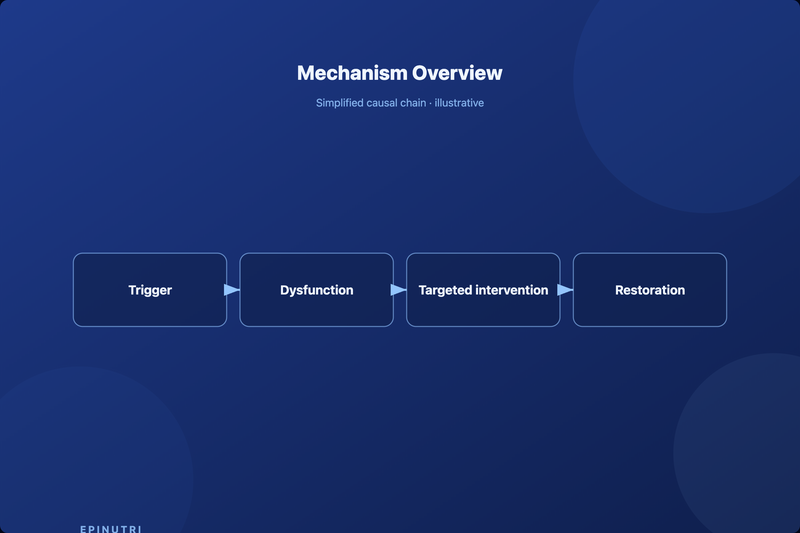
The protocol was structured in three phases over twelve weeks, prioritising mitochondrial restoration whilst respecting the patient's severe exercise intolerance and post-exertional malaise. For the full protocol rationale and evidence base, see the companion Mitochondrial Restoration Protocol article.
Phase 1: Stabilise and Pace (Weeks 1-4)
Safety note (boxed): Graded exercise therapy is contraindicated where post-exertional malaise is present; NICE NG206 explicitly recommends against GET for ME/CFS. Exercise that worsens a patient for 24–72 hours afterwards is PEM, not deconditioning, and prescribing graded exercise risks prolonged relapse. Any future medication or dose change is made by the prescribing clinician, before the relevant marker shifts — not in reaction to it.
Phase 1 halted the push-crash cycle and began oxidative-stress reduction. The primary intervention was structured pacing with a wearable heart rate monitor, which significantly reduces post-exertional symptom exacerbation in post-COVID syndrome (Parker et al., 2023). James kept his heart rate below (220 − age) x 0.55 = 101 bpm for all daily activity, stopping immediately above it, with explicit permission to rest without guilt (Workwell Foundation, 2025).
Supplementation initiated (adjuncts to pacing and diet):
- Coenzyme Q10 (ubiquinol): 200 mg twice daily (400 mg total). The reduced, bioavailable form supporting electron transport at Complexes I and III; plasma CoQ10 was depleted (Mantle, Hargreaves and Domingo, 2024; Molnar et al., 2024).
- N-Acetylcysteine (NAC): 600 mg twice daily. Glutathione precursor (glutathione was low on testing); evidence supports accelerated post-COVID recovery (Wang et al., 2025) and it has been investigated for brain fog (Fesharaki-Zadeh and Arnsten, 2024).
- Magnesium glycinate: 200 mg elemental twice daily (400 mg total). An obligate ATP cofactor; RBC magnesium was low. Glycinate chosen for absorption and glycine-mediated sleep support.
- Vitamin D3: 4,000 IU daily with K2 (100 microg as menaquinone-7). Rationale: 25(OH)D was functionally deficient at 48 nmol/L; vitamin D modulates mitochondrial oxidative phosphorylation and immune function. For context on vitamin D dosing considerations, see the related guidance.
Phase 2: Restore Mitochondrial Function (Weeks 5-8)
With pacing established and acute oxidative stress beginning to reduce, Phase 2 added targeted mitochondrial substrates:
Supplementation continued from Phase 1, plus:
- Nicotinamide riboside (NR): 300 mg daily, titrated to 600 mg by week 6 (conservative for body weight and tolerability). An NAD+ precursor supporting Complex I and sirtuin-mediated biogenesis; a 2025 RCT showed within-group gains in fatigue, sleep, and mood in long COVID, though the primary cognitive endpoint was not significant between groups (Wu et al., 2025).
- D-Ribose: 5 g twice daily (10 g total). Rate-limiting substrate for ATP regeneration; multi-centre CFS/fibromyalgia trials reported roughly 61% improvement in energy and 30% in mental clarity (Teitelbaum et al., 2005; Teitelbaum, Jandrain and McGrew, 2012).
- Acetyl-L-carnitine: 1,000 mg daily. Transports long-chain fatty acids for beta-oxidation and supplies acetyl groups for acetylcholine synthesis.
- R-Lipoic acid: 200 mg daily. Mitochondrial antioxidant and cofactor for pyruvate and alpha-ketoglutarate dehydrogenase.
Dietary intervention: Protein raised to 1.6 g/kg (~120 g daily for his 75 kg frame) across three meals to reverse muscle catabolism and supply branched-chain amino acids for biogenesis signalling, within a Mediterranean-style anti-inflammatory pattern (polyphenol-rich berries, olive oil, green tea). See dietary guidance for 2025-2030.
Phase 2: Restore Mitochondrial Function (Weeks 5-8)
| Supplement | Daily dose | Rationale | Evidence tier |
|---|---|---|---|
| CoQ10 (ubiquinol) | 200 mg | ETC Complex III support | Strong (systematic reviews) |
| D-ribose | 5 g x3 | ATP substrate replenishment | Moderate (RCT) |
| NR (nicotinamide riboside) | 300 mg | NAD+ precursor | Moderate (human trials) |
| NAC | 600 mg x2 (continued) | Glutathione support | Strong (RCTs) |
| Methylated B-complex | As directed | Cofactor repletion | Moderate |
| Iron bisglycinate | 25 mg | Ferritin optimisation | Strong (guidelines) |
| Vitamin D3 | 4,000 IU | Immune + mitochondrial support | Strong (NICE) |
Legend: Strong = systematic reviews or major guidelines; Moderate = individual RCTs or well-designed human trials. Dosages are illustrative and should be individualised. The Phase 2 protocol targets several electron-transport-chain points at once — CoQ10 and NR address the two most commonly depleted cofactors, D-ribose the substrate for ATP resynthesis.
Phase 3: Rebalance and Rebuild (Weeks 9-12)
Phase 3 expanded the pacing envelope and addressed the Wheel of Life dimensions:
Pacing progression: As symptoms improved, James's heart rate ceiling was cautiously raised to 60% of age-predicted maximum (110 bpm). Walking duration was increased by no more than 10% per week, with strict monitoring for any resurgence of PEM.
Sleep restoration protocol: A consistent sleep window (22:30-07:00) was established with a 45-minute pre-sleep wind-down: amber-lighting only, no screens, magnesium glycinate dose moved to evening, and a guided body-scan meditation. This targeted the "tired but wired" pattern by reducing sympathetic activation before sleep.
Wheel of Life interventions:
- Movement: Gentle morning walks (initially 5 minutes, progressing to 20 minutes by week 12), always within the heart rate ceiling. No graded exercise — movement was prescribed for joy and nervous system regulation, not performance.
- Stress Management: Daily 5-minute box-breathing practice (4 seconds in, 4 hold, 4 out, 4 hold). Morning sunlight exposure (10 minutes within 30 minutes of waking) to entrain cortisol rhythm.
- Relationships: James was encouraged to have one non-illness conversation with his wife daily — a deliberate psychological separation of his identity from his diagnosis. He rejoined his running club for the social element only — attending post-run coffee without running.
- Purpose: He was supported in reframing his reduced professional capacity as temporary — a medical leave, not a career ending.
Thyroid support: With evidence of low T3 syndrome, selenium (200 microg as selenomethionine) and zinc (30 mg as zinc picolinate) were added to support deiodinase-dependent peripheral T4-to-T3 conversion — a substrate trial before any consideration of thyroid hormone replacement.
Interpretation: The sequencing was deliberate. Phase 1 (HR ceiling 101 bpm; NAC, magnesium, CoQ10, vitamin D3) halted the push-crash cycle and began glutathione restoration, so the mitochondrial substrates added in Phase 2 (NR, D-ribose, acetyl-L-carnitine, R-lipoic acid, protein, thyroid support) were not oxidatively consumed before they could act. Phase 3 expanded the activity envelope cautiously (ceiling 110 bpm) with heart-rate monitoring as the objective guardrail. Re-testing at week 12.
Evidence tier summary
Evidence tier summary
| Intervention | Evidence tier | Key sources |
|---|---|---|
| Structured pacing with HR monitoring | Strong (longitudinal cohort + NICE NG206) | Parker et al. 2023; NICE 2021 |
| CoQ10 (ubiquinol) for post-viral fatigue | Moderate (RCTs + mechanistic) | Mantle, Hargreaves and Domingo 2024; Molnar et al. 2024 |
| NAC for glutathione restoration | Moderate (RCT) | Wang et al. 2025 |
| Nicotinamide riboside (NAD+ precursor) | Emerging (RCT -- within-group significance) | Wu et al. 2025 |
| D-ribose for CFS/fibromyalgia | Moderate (multi-centre open-label) | Teitelbaum et al. 2005, 2012 |
| Selenium/zinc for low T3 syndrome | Emerging (mechanistic + clinical consensus) | Molnar et al. 2024 |
Legend: Evidence tiers reflect the strength of the clinical evidence base. "Strong" = systematic reviews or multiple large RCTs. "Moderate" = individual RCTs, well-designed cohort studies, or strong mechanistic data with clinical support. "Emerging" = pilot studies, mechanistic evidence, or expert consensus pending further trials.
Interpretation: Structured pacing has the strongest evidence base, supported by NICE NG206 and the Parker et al. longitudinal cohort. CoQ10 and NAC have moderate RCT support specific to post-viral fatigue. Nicotinamide riboside showed within-group improvements in the 2025 RCT but did not reach between-group significance on the primary cognitive endpoint, placing it in the emerging tier. Selenium/zinc for low T3 syndrome is mechanistically sound but lacks dedicated RCTs.
Outcomes at 12 Weeks
James returned for his follow-up consultation in June 2026. The clinical improvement was substantial across subjective, objective, and biochemical domains.
These outcomes reflect a composite pattern. Individual responses vary depending on viral variant, symptom duration, co-morbidities, adherence, and practitioner oversight. This is marked improvement and partial remission, not a cure; the supplements described were adjuncts to pacing, diet, and clinical oversight.
Symptom Resolution
Fatigue: Chalder Fatigue Scale score reduced from 8/10 (severe) to 2/10 (mild, non-disabling). James described his energy as "not quite pre-COVID, but I can live my life again." PEM episodes — which had been occurring 3-4 times weekly — had reduced to one minor episode every 2-3 weeks, each resolving within hours rather than days. He was walking 8,000-10,000 steps daily without triggering a crash.
Brain fog: Word-finding difficulty had resolved. Short-term memory had improved subjectively — he was once again managing complex architectural drawings without needing to re-check figures. He described his mental state as "clear — I didn't realise how foggy I was until it lifted."
Sleep: The unrefreshing sleep pattern had improved. He was falling asleep within 20 minutes, waking once nightly (vs. 2-3 times previously), and — most significantly — waking feeling rested. His PSQI (Pittsburgh Sleep Quality Index) score reduced from 14 (poor sleep, clinically significant) to 6 (mild disturbance).
Mood: The anticipatory anxiety about his health had substantially diminished. He reported a renewed sense of hope and agency — "I'm not a passenger in my own body anymore."
Repeat Testing at 12 Weeks
Organic Acids Test:
- Citrate: 315 micromol/mmol creatinine (previously 98 — now within reference range)
- Succinate: 45 micromol/mmol creatinine (previously 16 — normalised)
- Lactate: 28 microg/mg creatinine (previously 52 — now below the threshold for anaerobic shift)
- 8-OHdG: 3.1 ng/mg creatinine (previously 5.8 — oxidative DNA damage marker reduced by 47%)
Nutritional markers:
- Ferritin: 78 microg/L (previously 42 — now above functional optimal)
- B12: 612 pg/mL (previously 298 — optimal)
- RBC magnesium: 5.9 mg/dL (previously 4.2 — optimal)
- CoQ10 plasma: 1.2 microg/mL (previously 0.48 — robustly replete)
- Vitamin D: 112 nmol/L (previously 48 — optimal)
- Glutathione (RBC): 1,024 micromol/L (previously 768 — restored to optimal)
Thyroid panel:
- TSH: 1.6 mIU/L (previously 2.8 — now within functional optimal)
- Free T3: 5.1 pmol/L (previously 3.8 — now optimal)
- T3/rT3 ratio: 24.8 (previously 12.7 — normalised), indicating restoration of peripheral thyroid conversion
Salivary cortisol:
- Morning (08:00): 14.6 nmol/L (previously 8.2 — now within reference)
- The cortisol rhythm had re-established a normal diurnal curve with adequate morning output and appropriate evening decline.
Functional Health Matrix Re-Score
Functional Health Matrix Re-Score
| Node | Initial | Final | Change | Commentary |
|---|---|---|---|---|
| Structural Integrity | 3 | 4 | +1 | Muscle mass visibly restored with improved protein intake and gentle movement. |
| Defence & Repair | 2 | 4 | +2 | CRP normalised at <1.0 mg/L. No infections in the preceding 8 weeks. Immune resilience restored. |
| Energy Production | 1 | 4 | +3 | The defining change. ATP production restored as evidenced by normalised citric acid cycle intermediates, cleared lactate, and functional restoration. Not yet optimal — some fatigue remains at the upper end of activity — but no longer disabling. |
| Biotransformation & Elimination | 3 | 4 | +1 | Oxidative stress markers halved. Glutathione restored. Hepatic metabolism functioning well. |
| Transport | 3 | 4 | +1 | Orthostatic symptoms resolved. Autonomic function substantially improved. |
| Communication | 1 | 4 | +3 | HPA axis rhythm restored. T3 normalised. Brain fog cleared. The communication node — the interface between energy, hormones, and cognition — was fundamentally restored. |
| Assimilation | 2 | 4 | +2 | Nutritional biomarkers all shifted from borderline/suboptimal to optimal, indicating improved absorption. Gut microbiome likely supported by dietary polyphenols — formal stool testing deferred to Phase 4 (maintenance). |
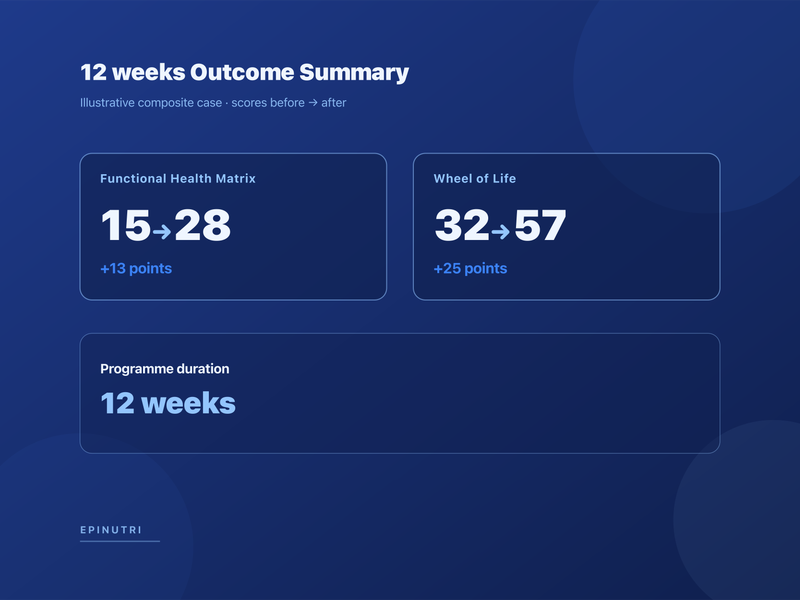
Total Final Matrix Score: 28/35 (previously 15/35) — an improvement of 13 points. Every node improved. The Energy Production and Communication nodes, which had been at crisis level (1/5), were now near-optimal.
Interpretation: Energy Production (+3) and Communication (+3) — the two crisis nodes that defined the presentation — showed the greatest gains. Normalised citric acid cycle intermediates, cleared resting lactate, restored T3/rT3 ratio, and a re-established cortisol rhythm gave objective biochemical confirmation, turning the "hourglass" pattern into a near-balanced one.
Wheel of Life Re-Score
Wheel of Life Re-Score
| Dimension | Initial | Final | Change | Commentary |
|---|---|---|---|---|
| Nutrition & Diet | 4 | 8 | +4 | Consistently meeting protein target. Mediterranean dietary pattern well-established. Meal preparation shared with spouse. |
| Sleep & Recovery | 2 | 7 | +5 | Waking refreshed most mornings. Sleep routine firmly embedded. PSQI score improvement confirmed objectively. |
| Movement & Exercise | 1 | 6 | +5 | Walking 8,000-10,000 steps daily. Some gentle cycling. No formal running yet, but contemplating a return within the next three months. |
| Stress Management | 3 | 7 | +4 | Daily breathwork practice established. Morning light exposure habitual. Anxiety about health largely resolved. |
| Relationships & Community | 5 | 7 | +2 | Running club social contact re-established. Marital relationship improved as functional dependence reduced. Active engagement with children restored. |
| Purpose & Meaning | 6 | 8 | +2 | Returned to 4 days/week of architectural work with expanded capacity. Reframed illness experience as deepened empathy — considering mentoring other long COVID patients. |
| Environment & Toxins | 6 | 7 | +1 | Alcohol reduced to 2-3 units weekly (one pint, once weekly). Home environment unchanged but low-toxin awareness increased. |
| Spiritual Practice | 5 | 7 | +2 | Morning walk incorporated as contemplative practice. Body-scan meditation before sleep. Reframed recovery as a practice in patience and self-compassion. |
Total Final Wheel of Life Score: 57/80 (previously 32/80) — an improvement of 25 points. Every dimension improved by at least 1 point. The dimensions that scored at crisis level initially (Sleep at 2/10, Movement at 1/10) had been restored to functional or near-functional levels.
Interpretation: Sleep (+5) and Movement (+5) — the two crisis-level dimensions — improved most. Movement rose from 1/10 to 6/10 through structured pacing rather than graded exercise, showing that heart-rate-guided activity expansion can safely restore function in post-viral fatigue. Every dimension improved, reflecting the systemic nature of recovery when cellular energy is restored.
In James's own words at his final consultation: "Twelve weeks ago I couldn't imagine being here. I'm not back to my old self, but I can live my life again — breakfast with my kids, a day's work I'm proud of, an evening walk with my wife. Before this I was flattened and falling. The biggest change is feeling that my body can keep recovering."
Maintenance Plan
James was transitioned to a maintenance protocol — CoQ10 200 mg daily, magnesium glycinate 200 mg daily, vitamin D3 2,000 IU daily, D-ribose 5 g as needed on higher-demand days, and continued heart-rate-informed pacing with cautious envelope expansion. Repeat organic acids testing at 6 months and a stool microbiome analysis were arranged to confirm sustained recovery and assess any residual post-infectious dysbiosis.
Clinical Pearls
- The "normal" blood trap. Suboptimal ferritin (42 microg/L), low-normal B12 (298 pg/mL), borderline magnesium, low T3, and low CoQ10 each sat within population reference ranges yet, layered onto post-viral mitochondrial impairment, constituted a metabolic crisis. Reference ranges describe population distributions, not individual requirements; interpret functional ranges with the same rigour as conventional cut-offs in complex chronic disease.
- Pacing is not graded exercise — and conflating them harms patients. Graded exercise therapy (time-contingent escalation regardless of symptoms) triggered severe post-exertional malaise here; heart-rate-ceilinged pacing was therapeutic. NICE NG206 explicitly recommends against GET for ME/CFS and recognises PEM as a defining feature (Parker et al., 2023; Workwell Foundation, 2025). Pacing must come before supplementation: cofactors begun while the patient still exceeds their energy envelope will not be utilised.
- Mitochondrial restoration needs protection before provision. Reaching first for CoQ10 and ribose without reducing oxidative stress (NAC, pacing) lets those substrates be consumed before they can act. Stop the damage, then feed the repair — the same sequencing logic applied in the chronic fatigue and SIBO case, where gut restoration preceded mitochondrial support.
- Low T3 syndrome in chronic illness is often reversible without thyroid hormone. This non-thyroidal illness pattern (low T3, raised reverse T3, low-normal T4, high-normal TSH) reflects inflammation-impaired deiodinase activity. Selenium and zinc to support conversion, mitochondrial substrates to lower inflammatory burden, and sleep restoration normalised T3 by week 12 — addressing the driver rather than prescribing levothyroxine. Re-test before any thyroid or adrenal dose change; symptoms lag biochemistry.
- Safety net. Refer urgently for new or worsening cardiac symptoms (chest pain, sustained resting tachycardia >120 bpm, syncope), progressive neurological decline, metabolic derangement on repeat testing, significant psychiatric deterioration, unexplained weight loss >10%, or no improvement after 8 weeks. In an emergency call 999; for urgent non-emergency concerns NHS 111; in distress, Samaritans 116 123 or text SHOUT to 85258.
Internal navigation
If this case study resonated, you may find the following posts clinically relevant:
- Mitochondrial Restoration Protocol: a 12-week functional medicine framework -- the protocol companion to this case study
- Essential Functional Medicine Labs for 2026 -- for organic acids testing and nutritional assessment interpretation
- The 5R Gut Health Protocol: a functional medicine framework for 2026 -- relevant for post-viral gut microbiome restoration
- Case Study: Resolution of 8-Year Chronic Fatigue, IBS, and Brain Fog -- related post-infectious fatigue case with overlapping mitochondrial themes
- Case Study: Rheumatoid Arthritis Remission -- another case where systemic inflammation drove multi-system dysfunction
- Dietary Guidance 2025-2030: functional medicine alignment -- the anti-inflammatory dietary framework applied in Phase 2
This case study is for education and represents a composite of clinical patterns. Individual patient factors must guide all treatment decisions, and nutritional interventions should be supervised by a registered practitioner.
References
- [1]Cordero, M.D., Alcocer-Gomez, E., de Miguel, M., Culic, O., Carrion, A.M., Alvarez-Suarez, J.M., Battino, M (2013) ‘and Sanchez-Alcazar, J.A’, (. doi:10.1016/j.mito.2013.08.003
- [2]Fesharaki-Zadeh, A (2024) ‘and Arnsten, A.F.T’, (. doi:10.1016/j.nerep.2024.100208
- [3]Institute for Functional Medicine (2024) *The Functional Medicine Matrix* (2024) ‘Available at: https://www.ifm.org/functional-medicine-matrix/ (Accessed: 28 May 2026)’. www.ifm.org
- [4]Mantle, D., Hargreaves, I.P (2024) ‘and Domingo, J.C’, (. doi:10.3390/ijms25010574
- [5]Molnar, T., Lehoczki, A., Fekete, M., Varnai, R., Zavori, L., Erdo-Bonyar, S., Simon, D., Berki, T., Csipo, T (2024) ‘and Feher, A’, (. doi:10.1007/s11357-024-01169-1
- [6]Parker, M., Sawant, H.B., Flannery, T., Tarrant, R., Shardha, J., Bannister, R., Ross, D., Halpin, S., Greenhouse-Tucknott, A., Drosos, J., and Sivan, M (2023) ‘(2023) 'Effect of using a structured pacing protocol on post-exertional symptom exacerbation and health status in a longitudinal cohort with the post-COVID-19 syndrome', Journal of Medical Virology, 95(1), e28373’, doi:10.. doi:10.1002/jmv.28373
- [7]Stewart, A (2024) ‘(2024) Deficiency Symptoms and Signs (practitioner reference guide)’, Stewart Nutrition. www.stewartnutrition.co.uk
- [8]Teitelbaum, J.E., Jandrain, J (2012) ‘and McGrew, R’, (. doi:10.2174/1876386301205010032
- [9]Teitelbaum, J.E., St (2005) ‘Cyr, J’, and Johnson, C. doi:10.1089/acm.2006.12.857
- [10]Wang, L., Xie, Y., Chen, S., Wang, F., Liu, M., Zhang, Y., Li, J (2025) ‘and Yang, H’, (. doi:10.1101/2025.12.10.25342003
- [11]Wood, E., Hall, K (2025) ‘and Lee, R’, (. doi:10.1080/07853890.2025.2528167
- [12]Workwell Foundation (2025) *Pacing with a Heart Rate Monitor to Minimize Post-Exertional Malaise (PEM) in ME/CFS and Long COVID* (2025) ‘Available at: https://workwellfoundation.org/pacing-with-a-heart-rate-monitor-to-minimize-post-exertional-malaise-pem-in-me-cfs-and-long-covid/ (Accessed: 28 May 2026)’. workwellfoundation.org
- [13]Wu, C.Y., Guzman-Velez, E., Salazar, J., Martinez, J.E., Vila-Castelar, C., Palacios, R.D., Ward, K., Gatchel, J.R., Fesharaki-Zadeh, A., Quiroz, Y.T (2025) ‘and Sperling, R.A’, (. doi:10.1016/j.eclinm.2025.103162
Written by


EPINUTRI Editorial Team
Clinical Content Team
Medical disclaimer: The content in this article is for informational purposes only and does not constitute medical advice, diagnosis, or treatment. Always consult a qualified healthcare professional before making any changes to your health regimen. Individual results may vary. If you are experiencing a medical emergency, please contact 999 immediately.
Related Articles
ēpinutri
Observational
Plant-based vs Animal Protein: What the 2026 RCT Meta-analysis Actually Shows
Clinical context: which patients benefit [CONTENT: 200-300 words. Describe the clinical presentations where this dietary...
 Chris Massamba1 Jun 20262 min
RCT
CGM in Functional Practice: When Continuous Glucose Monitoring Adds Clinical Value
When to order CGM -- and when not to CGM technology has moved rapidly from specialist diabetes clinics into direct-to-co...
Chris Massamba30 May 202632 min